There is a moment that happens to wine lovers when they visit Croatia for the first time. They arrive expecting the deep, structured reds — the famous Plavac Mali from the sun-scorched hillsides of the Pelješac Peninsula — and they are not disappointed. But then something unexpected appears on the table. A cold, pale golden glass is set down. The nose is aromatic and mineral, shot through with the scent of stone fruit and dried herbs, with something coastal about it, something that smells almost like the Adriatic breeze itself. They take a sip and they stop talking.
That wine is Pošip. And it is Croatia’s greatest white wine secret.
For too long, Pošip wine Croatia has remained one of the most underappreciated white wines in Europe. While Italian sommeliers were writing breathlessly about Greco di Tufo and French critics were elevating Burgundian Chardonnay to near-religious status, this ancient, indigenous Dalmatian grape was quietly producing wines of remarkable character and depth on a small Croatian island that most wine drinkers could not have found on a map. That is changing now, and fast.
Korčula wine — and Pošip in particular — is no longer a secret kept only by the Croatian diaspora, visiting sailors, and the lucky few who wandered into a Dalmatian wine cellar. International awards have arrived. Sommeliers in London, Vienna, and New York have started ordering it. Wine writers are making the pilgrimage to the stone villages of Čara and Smokvica to meet the people who make it. The story of Pošip wine is finally being told at the right volume.
This is that story.
What Is Pošip? — The Grape
An Indigenous Variety Like No Other
Pošip (pronounced POH-ship) is a white wine grape variety native to Croatia, grown almost exclusively on Korčula Island in the southern Dalmatian region. It is one of the oldest indigenous Croatian grape varieties still in commercial production today, and it occupies a singular position in the country’s wine culture — the undisputed flagship of Croatian white wine.
Unlike many of the world’s most celebrated white varieties, Pošip has never needed to travel. It has not been planted in California or planted out across Australian wine regions in search of new terroir. It belongs, with a fierce and specific loyalty, to one island. Korčula is where Pošip was born. Korčula is where it thrives. And Korčula wine built on the Pošip grape remains the most honest and compelling expression of this variety.
Origins and DNA
The DNA history of Pošip is still being pieced together by ampelographers and viticulture researchers, but the broad contours of the story are clear. Pošip is an ancient variety, most likely present on Korčula Island for well over a thousand years. One of the most compelling theories suggests the variety arrived with early settlers or monastic communities — Benedictine monks established an active presence on the island in the medieval period, and the cultivation of vines was a central part of their agricultural and spiritual practice.
Genetic analysis has confirmed that Pošip is not closely related to the major Western European wine grapes. It belongs to a family of indigenous Adriatic varieties, sharing some genetic heritage with other Dalmatian whites but ultimately standing apart as its own distinct and unreplicated thing. Attempts to find Pošip planted outside its home territory in meaningful commercial quantities have consistently come up short. This is, in every meaningful sense, a wine that cannot be counterfeited by geography.
The Character of the Grape
Growers on Korčula describe Pošip with a kind of affectionate respect. The vine is vigorous and productive, but it demands patience. The grape is thick-skinned, which gives it natural resistance to the fungal diseases that plague thinner-skinned white varieties in warm, humid Mediterranean conditions. This robustness also means Pošip can hang on the vine longer than many white grapes — it is a late-ripening variety, typically harvested in late September or October, when other white grapes have long since been picked.
The thick skins contribute to the wine’s structure and its ability to age. They also help Pošip endure the heat of a Dalmatian summer without losing freshness entirely — a genuine challenge in a climate that regularly delivers temperatures above 35°C during peak summer.
Why Korčula?
The question of why Pošip thrives so specifically on Korčula comes down to a convergence of factors that wine people call terroir — that untranslatable French word for the total environment of a vine. Korčula offers Pošip exactly what it needs: limestone-rich soils that drain well and reflect heat back into the vine canopy, a Mediterranean climate with hot dry summers and mild wet winters, and the constant presence of sea breezes from both the north and south sides of this elongated island that prevent temperatures from becoming fatally extreme.
The inland plateau of central Korčula — centered on the villages of Čara and Smokvica — provides a slightly different microclimate from the coastal vineyards, one that is cooler at night and better at preserving the natural acidity that gives Pošip its freshness. The sea is never far away, and its influence is felt in the wine — a mineral quality, a salinity on the finish, that is one of Pošip’s most distinctive and delicious characteristics.
The History of Pošip Wine
The Village of Čara: Birthplace of a Wine
The story of modern Pošip production begins in Čara, a small stone village set back from the coast in the heart of Korčula Island. Čara is not a flashy place. There are no yachts mooring in front of it, no sunset cocktail bars on a promenade. It is a working agricultural village surrounded by vines, olive groves, and the dry stone walls that the islanders have been building and maintaining for generations. And it is the spiritual and historical heartland of Pošip wine.
The village’s connection to Pošip is so deep that local families treat the variety almost as a member of the community. Old-timers can tell you which specific hillside plots produce grapes of particular quality, and the name Čara has become synonymous with the best expressions of Korčula wine in the minds of Croatian wine enthusiasts. When you see “Čara” on a Pošip label, you are looking at wine from the heartland.
Near Extinction and Rescue
By the mid-twentieth century, Pošip had come close to disappearing entirely. The upheavals of the postwar Yugoslav period, the movement of rural populations toward the cities, and the general decline of small-scale subsistence viticulture across Dalmatia meant that many of the ancient indigenous varieties were simply abandoned. Vineyards went unplanted. Knowledge passed away with older generations.
Pošip survived because of a small group of committed growers in the Čara-Smokvica area who refused to let it go. They continued tending their old vines, continued making wine in the traditional way, and continued pressing the variety on anyone who would listen. Their persistence was, in retrospect, an act of genuine cultural preservation.
The Role of the Čara-Smokvica Cooperative
The wine cooperative based in the Čara-Smokvica area played a decisive role in stabilizing Pošip production during the difficult decades of the late twentieth century. By pooling resources, standardizing some aspects of production, and creating a consistent market for the grape, the cooperative gave small growers a reason to continue planting and tending Pošip vines rather than converting to more commercially obvious varieties.
The cooperative model also helped establish quality standards that gave Pošip wine a consistent baseline identity — so that a buyer in Zagreb or a hotel buyer in Dubrovnik could have confidence in what they were purchasing. This institutional support was not glamorous, but it was essential. Without it, Pošip might have become one of those varieties that appears only in academic papers about lost Croatian heritage.
The Modern Renaissance
The last two decades have been extraordinary for Pošip wine Croatia. A new generation of boutique producers has arrived — some the children of cooperative members who wanted to make wine in their own way, some returning from careers in other fields, some outsiders drawn to the island by its wines. These producers have brought with them new techniques, new thinking about terroir expression, and a desire to make wines that can compete on the international stage.
The results have been remarkable. Pošip is now winning medals at international competitions and appearing on the wine lists of serious restaurants in European capitals. Croatian wine has finally arrived at the world’s table, and Pošip is one of the primary reasons why.
Pošip Wine — Taste Profile and Styles
Classic Unoaked Pošip
The most common and widely available style of Pošip wine is the classic unoaked expression — stainless steel fermented, bottled young, and designed to be drunk with some freshness and vigor. This is the Pošip that most visitors to Korčula encounter first, and it is a genuinely wonderful wine.
On the nose, expect citrus — lemon zest, sometimes a whisper of grapefruit — alongside riper stone fruits like white peach, yellow plum, and apricot. There is often an herbal quality, reminiscent of dried Mediterranean herbs: rosemary, thyme, sage. Underneath all of this is the mineral character that Korčula’s limestone soils contribute — a stony, slightly saline quality that gives the wine lift and direction.
On the palate, classic Pošip is medium-bodied with good natural acidity. It is dry, clean, and refreshing without being thin or vapid. The finish is long for a wine at this price point, with a pleasantly bitter, almond-skin quality that is characteristic of the variety. The typical alcohol level runs between 13 and 14.5%, reflecting the grape’s ability to accumulate sugar in the Mediterranean sun while retaining enough acidity to stay in balance.
Oaked and Barrel-Fermented Pošip
A growing number of Korčula wine producers are exploring barrel fermentation and aging for Pošip, and the results can be spectacular. When the variety is given time in French oak — typically barriques of 225 litres — it develops a richer, fuller character: toasted bread, vanilla, light spice, and a creaminess on the palate that sits alongside the variety’s natural stone fruit and mineral notes rather than overpowering them.
The best barrel-aged Pošip wines are among the most serious white wines being made in Croatia today. They can age beautifully — eight to ten years is achievable with the best examples — and they develop a complexity that invites comparison with high-quality white Burgundy or premium Rhône whites.
Late Harvest and Dessert Pošip
The thick skins and late-ripening character of Pošip make it a natural candidate for late-harvest winemaking, and a small number of producers explore this direction in exceptional vintages. Late-harvest Pošip is deeply golden in color, with concentrated flavors of dried apricot, honey, orange peel, and almonds. It is not produced every year, and quantities are always small, which makes it something of a collector’s item among Croatian wine enthusiasts.
Natural and Orange Wine Styles
The natural wine movement has made its presence felt in Croatian wine, and a handful of adventurous Pošip producers are experimenting with extended skin contact, wild fermentations, and minimal intervention. The resulting “orange” Pošip wines are amber-hued, oxidative, tannic, and deeply textural — a radical departure from the fresh, aromatic unoaked style but one that showcases a completely different dimension of the variety’s character.
How Pošip Compares to Other White Wines
Wine lovers coming to Pošip from other white wine backgrounds often find the closest comparisons in the aromatic, mineral whites of southern Italy — particularly Greco di Tufo from Campania, which shares a similar combination of stone fruit character, textural weight, and minerality. There is also a family resemblance to the fuller styles of white Burgundy Chardonnay, though Pošip is more aromatic and more overtly Mediterranean in character. Viognier lovers will find something to connect with in the stone fruit and floral dimensions of Pošip, though the Croatian grape has considerably more freshness and less weight than a typical Rhône Viognier.
What Pošip offers that none of these comparisons fully capture is its specific Dalmatian identity — the sense of place that comes from the limestone soils, the sea light, and the particular combination of heat and salt air that shapes every vintage on Korčula.
Where Is Pošip Grown? — The Terroir
Korčula Island: The Spiritual Home
Korčula Island is a long, narrow finger of land stretching roughly 47 kilometres from northwest to southeast, set in the Adriatic approximately 20 kilometres offshore from the Pelješac Peninsula. It is one of the most densely forested islands in Croatia — the Venetians called it “Black Corfu” for the darkness of its pine and oak forests — and the combination of forest and vineyard gives the interior landscape a particular richness and variety.
The island’s viticulture is concentrated in two distinct zones. The coastal vineyards — planted on terraced hillsides close to the sea — produce wines with direct maritime influence. The inland plateau, centered on the villages of Čara and Smokvica, produces wines of greater structure and complexity, shaped by higher altitude, greater diurnal temperature variation, and the slightly different soil profiles found away from the coast.
Čara and Smokvica: The Wine Villages
Čara and Smokvica are the twin heartlands of Pošip production on Korčula Island. These are not tourist villages in any conventional sense — they lack the old town beauty of Korčula Town or the beach-focused energy of Lumbarda. They are working agricultural communities where the rhythm of life is still shaped by the vine.
The vineyards around both villages sit at an elevation that provides meaningful relief from the coastal heat, and the orientation of the Čara plateau in particular — sheltered from the worst of the northern Bura wind but open to cooling southerly breezes from the channel — creates a microclimate that ripens Pošip slowly and evenly. This measured ripening is the key to the variety’s characteristic aromatic complexity and structured acidity.
Soil: Limestone and Red Terra Rossa
The soils of the Čara-Smokvica area are predominantly limestone — the same white, porous bedrock that underlies most of Croatia’s best wine regions. Limestone drains freely, which stresses the vine slightly and concentrates flavors. It also reflects light and heat back into the vine canopy, promoting even ripening even in cooler pockets of the vineyard.
Across parts of the plateau, the limestone is covered by a layer of red terra rossa — an iron-rich clay soil that retains just enough moisture to keep the vine from complete drought stress during the driest summer months. This combination of well-draining limestone and slightly moisture-retentive terra rossa gives Pošip vines exactly the hydric balance they need to ripen slowly and fully without either drought stress or waterlogging.
Harvest Timing
Pošip is picked late. While many of Croatia’s other white varieties come in during August and early September, Pošip growers in the Čara-Smokvica area typically wait until late September and often into October before harvesting. This extended hang time allows the grape’s complex aroma precursors to develop fully while the thick skins protect the fruit from sunburn and botrytis.
Pošip vs. Grk — Korčula’s Two White Wines
Any serious exploration of Korčula wine must eventually address the island’s other great indigenous white variety: Grk. Both Pošip and Grk are grown on Korčula, both are ancient indigenous varieties, and both produce wines of real distinction. But they are fundamentally different grapes producing fundamentally different wines, and understanding the distinction enriches any visit to the island.
Grk: The Wine of Lumbarda
Grk is grown in a single location on the island — the sandy bay around the village of Lumbarda at Korčula’s southeastern tip. This is one of the only sandy soil wine-growing sites in all of Croatia, and the combination of this unusual soil with the Grk grape produces a wine that is genuinely unlike anything else. Grk is lighter in body than Pošip, higher in natural acidity, and more delicate in its aromatics — mineral and citrus-forward, sometimes with a slightly phenolic, almost stony quality that reflects its unique terroir.
Grk is also a biological curiosity: the grape is technically a hermaphrodite whose flowers are functionally female, meaning it cannot self-pollinate and requires pollen from other varieties (typically Plavac Mali) to set fruit. This quirk of viticulture means Grk production is inherently limited and somewhat unpredictable, which adds to the wine’s rarity and mystique.
How to Tell Them Apart in the Glass
In the glass, the differences between Pošip and Grk are clear once you know what to look for. Pošip is fuller-bodied, more aromatic, and more overtly fruity — the stone fruit and herb notes are front and center. Grk is leaner, more restrained, more mineral, with a linear quality and a tartness that makes it a compelling aperitif wine. Both have excellent acidity, but Grk’s is more cutting and prominent; Pošip’s is better integrated into a broader palate structure.
Think of it this way: if Pošip is the warm, generous, aromatic wine that opens a meal with a flourish, Grk is the precise, mineral, intellectually interesting wine that rewards focused attention over a long dinner. Both are worth trying on any visit to Korčula wine country, and the contrast between them is one of the most interesting wine tasting experiences available anywhere in Croatia.
Food Pairing with Pošip Wine
Pošip is one of the most food-friendly white wines you will encounter. Its combination of aromatic richness, moderate body, good acidity, and mineral finish makes it a natural partner for a broad range of dishes, particularly those of the Dalmatian kitchen.
Seafood: The Natural Marriage
The most instinctive pairing for Pošip wine is seafood, and specifically the fish and shellfish of the Adriatic. Grilled branzino (European sea bass) dressed with olive oil and fresh herbs is perhaps the defining pairing — the wine’s stone fruit character plays beautifully against the rich, delicate fish, while its mineral finish echoes the ocean. Octopus salad — cold boiled octopus with potato, olive oil, parsley, and capers — is another classic match, the wine’s texture standing up to the octopus while its freshness cuts through the oil.
Scampi, whether grilled simply or prepared in the Dalmatian style with white wine and garlic, are a natural partner. So are sea bream, John Dory, and the various small rockfish that populate the local fish markets. With richer fish preparations — cream sauces, butter-based dishes — the barrel-aged style of Pošip offers more structural weight to match the richness of the dish.
Mali Ston Oysters
One of Croatia’s greatest gastronomic treasures is the oyster beds of Mali Ston, a small town on the inner coast of the Pelješac Peninsula where the clean, cold waters of the Mali Ston Bay have been producing oysters for centuries. These oysters are extraordinarily clean and briny, with a deep mineral character that makes them among the finest in the Mediterranean. Pošip wine — especially the unoaked style with its citrus and mineral notes — is the ideal accompaniment. The wine’s acidity acts as a natural condiment, brightening the oyster’s flavors in exactly the same way a squeeze of lemon would, while the mineral finish creates a harmony between wine and shellfish that feels almost preordained.
White Meats and Traditional Preparations
Pošip is not exclusively a seafood wine. It pairs beautifully with white meat preparations, particularly those cooked slowly under the traditional Dalmatian peka — a heavy bell-shaped lid placed over the dish and covered with hot embers, which creates a gentle, enclosed heat that produces extraordinarily tender results. Chicken or rabbit under peka, fragrant with herbs and vegetables, is a magnificent match for a barrel-aged Pošip with its toasty richness and structural weight.
Cheese and Olive Oil
The aged sheep’s milk cheeses of Dalmatia — firm, slightly sharp, with a concentrated, pastoral flavor — are excellent with Pošip. The wine’s fruity character and gentle bitterness play well against the cheese’s sharpness and fat. Similarly, dishes featuring high-quality Dalmatian olive oil — whether a simple bruschetta, a plate of local vegetables dressed with oil, or a more complex preparation — find a natural partner in Pošip’s aromatic generosity.
What to Avoid
Very rich red meat preparations — braised beef, lamb with heavy sauces — will overpower most Pošip expressions. The wine simply does not have the weight or the tannin structure to stand alongside deeply savory, fatty red meat dishes. For those preparations, Croatia’s excellent Plavac Mali is the natural choice. Similarly, heavily spiced dishes can overwhelm Pošip’s delicate aromatic character.
Visiting Pošip Wine Country — Korčula Island
The Wine Villages
A visit to Čara and Smokvica is essential for anyone who wants to understand Pošip wine at its source. These villages are easily missed by tourists who stick to the coast and the beaches — which is precisely what makes visiting them so rewarding. The landscape of the Čara plateau is startlingly beautiful: dry stone walls wind between old terraced vineyards, fig trees grow at the edges of the plots, and the stone farmhouses have the weathered solidity of buildings that have survived many centuries of Mediterranean summers and winters.
The pace of life in Čara and Smokvica is slow and genuine. Locals greet strangers with a natural warmth. Winemakers who make their living from the vine tend to be passionate explainers of what they do, and a visit to a cellar in these villages often turns into an extended conversation about soil, climate, vintage variation, and the philosophy of making wine from an indigenous grape that is grown nowhere else on earth.
What a Winery Visit Looks Like
Most Pošip producers in the Čara-Smokvica area operate on a small scale, and visiting them typically means calling ahead or simply arriving at the cellar door to see if someone is available. The tasting room experience in these villages is informal and personal — you are more likely to sit at a wooden table in a stone cellar with the winemaker’s family than to stand at a marble counter in a purpose-built tasting facility.
Wines are poured generously and explained with genuine enthusiasm. It is customary to buy a bottle or two if you have enjoyed the tasting, and prices are considerably lower when buying direct from the producer than in shops or restaurants. These direct purchases also support the small-scale, artisan economy that has kept Pošip wine alive and evolving.
Combining Wine and Beach
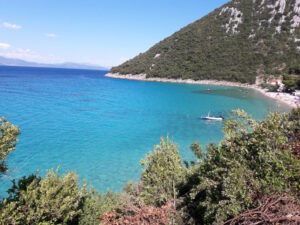
Korčula is not only a wine destination — it is also one of the most beautiful islands in the Adriatic, with clear turquoise water, excellent beaches, and a remarkably well-preserved medieval old town. The combination of wine tasting in the morning in the inland villages and a long, lazy afternoon on one of the island’s many beaches is one of the great pleasures of a Dalmatian holiday. The ferry from Orebić on the Pelješac Peninsula to Korčula Town takes only fifteen minutes and runs frequently, making it easy to combine a visit to the island with a base anywhere on the peninsula.
Pošip Beyond Korčula — Pelješac and the Mainland
Pošip’s success on Korčula has inspired a growing number of producers on the Pelješac Peninsula and elsewhere in Dalmatia to plant the variety and make their own interpretation of this Croatian white wine. Pelješac — already famous for its Plavac Mali reds — has proven a capable secondary home for Pošip, with the limestone soils and Mediterranean climate of the peninsula providing conditions that support the grape’s character, if in a slightly different idiom from the Korčula heartland.
Pelješac Pošip tends to show slightly more weight and riper fruit than the Čara-Smokvica style — the peninsula’s aspect and slightly different soil composition push the grapes toward more richness and less of the cool mineral precision that defines the best Korčula wine. This is not a deficiency — it is simply a different expression, and one that many drinkers find immediately appealing.
Beyond Pelješac, Pošip plantings are appearing across Dalmatia as the variety’s commercial and quality profile rises. Producers in the hinterland and on other islands are experimenting with the grape. So far, none of these outside-Korčula expressions have achieved the complexity and specificity of the island’s best wines, but the story is still being written, and it will be interesting to follow over the coming decades.
How to Buy Pošip Wine
Buying Direct from Producers
The best way to buy Pošip wine, both for quality and value, is directly from producers on Korčula Island. Cellar-door prices are typically 20 to 40 percent lower than retail prices in Dubrovnik or Split, and you have the opportunity to taste before you buy. Many producers will fill mixed cases for visitors, which is an excellent way to explore the range of styles from different makers and different parts of the island.
Specialty Wine Shops
Quality Pošip wine is available in specialty wine shops in Dubrovnik, Split, and Zagreb. These shops typically carry a curated selection of the better-known producers and represent a reliable source for visitors who do not have time to visit the island. Staff in these shops are usually knowledgeable and enthusiastic about Croatian wine — do not hesitate to ask for recommendations based on your taste preferences.
Exporting and Bringing Bottles Home
EU residents face no restrictions on bringing Croatian wine home in personal luggage, though standard airline liquids rules apply for carry-on. For travellers from outside the EU, standard import duty rules for wine apply in the destination country — check local regulations before packing a case. Specialist Croatian wine importers operate in Germany, Austria, the United Kingdom, and the United States, meaning it is increasingly possible to buy Pošip wine without ever visiting Croatia.
Reading the Label
When selecting Pošip wine, a few key label elements are worth knowing. The producer’s name and region are the most important. Look for designations connecting the wine to Čara or Smokvica if you want a wine from the traditional heartland. Vintage year matters — Pošip is generally best consumed within three to five years for the unoaked style, though premium barrel-aged examples can age for eight to ten years. The word “Pošip” must appear on the label — it is the variety name, and most Croatian producers label their wines by grape variety rather than by regional appellation in the Burgundian sense.
Price Ranges
Entry-level unoaked Pošip from cooperative producers and smaller estates typically falls in the range of €8 to €12 a bottle. Mid-range expressions from quality-focused boutique producers range from €12 to €20. Premium barrel-aged and special selection Pošip wines — from the island’s most ambitious producers — command €20 to €35 or more, and represent genuinely excellent value at that price compared to equivalent-quality whites from France or Italy.
Pošip Wine and the Rise of Croatian Wine
Croatia’s Wine Renaissance
The story of Pošip wine Croatia cannot be told in isolation from the broader renaissance of Croatian wine on the world stage. Croatia is one of the oldest wine-producing cultures in Europe — vines were growing in Dalmatia two thousand years before Christ, and the country has a greater density of indigenous grape varieties than almost any comparable wine region outside Georgia or Greece. But decades of political upheaval, the destruction wrought by the wars of the 1990s, and the legacy of mass-production-focused cooperative viticulture left Croatian wine chronically undervalued and under-explored.
The last fifteen years have changed this dramatically. A generation of talented Croatian winemakers — many of them educated in Italy, France, and Australia, returning home with technical skills and a belief in the quality potential of their indigenous varieties — has transformed the country’s wine profile. International wine media has followed, and the response has been enthusiastic.
Dalmatia, Istria, and Slavonia
Croatia’s wine geography divides broadly into three major zones. Istria, the triangular peninsula in the far northwest, is known for its Malvazija Istarska white wine and increasingly for serious red wines. Slavonia, the continental region in the northeast, produces wines from international varieties alongside indigenous whites, with a tradition of aging wine in large Slavonian oak barrels. Dalmatia — the coastal and island region stretching south from Šibenik to Dubrovnik — is where the most exciting indigenous variety work is concentrated, and where Pošip wine and Plavac Mali red wine define the region’s identity.
Plavac Mali vs. Pošip: Croatia’s Two Flagships
If Pošip is the king of Croatian white wine, Plavac Mali is the king of Croatian reds — and the two grapes together define the modern identity of Dalmatian wine. Plavac Mali, grown on the dramatic stone terraces of the Pelješac Peninsula and the islands of Hvar and Brač, produces deeply colored, full-bodied, tannic wines of real complexity. The variety is genetically related to Zinfandel (they share a parent grape, Dobričić), which gives wine lovers from California or Australia a fascinating point of entry into the Croatian red wine story.
Together, Pošip and Plavac Mali represent the fullest expression of what Dalmatia can offer the wine lover: a complete wine culture, rooted in indigenous varieties that grow nowhere else on earth, producing wines that are genuinely irreplaceable.
International Recognition
Pošip wine has been winning medals and recognition at international competitions with increasing regularity. The Decanter World Wine Awards, the International Wine Challenge, and various European competitions have all highlighted Pošip as one of Europe’s most exciting emerging white wine stories. Sommeliers and wine writers who have made the journey to Korčula return with descriptions that range from enthusiastic to rapturous. The consensus is consistent: this is one of the white wines that every serious wine lover should know.
Serving Pošip Wine — Temperature and Glassware
Serving Temperature
Unoaked Pošip is best served between 10 and 12°C — cold enough to show its freshness and aromatic vibrancy, but not so cold that it numbs the flavor. Many Croatian restaurants serve white wine too cold, which can suppress the very characteristics that make Pošip interesting. If your glass arrives very cold, hold it in your hands for a few minutes and let it warm slightly before forming a judgment.
Barrel-aged Pošip benefits from a slightly higher serving temperature — 12 to 14°C — which allows the toasty, complex notes from the oak aging to express themselves fully. At too low a temperature, the oak can make the wine seem tight and closed.
Glassware
A white Burgundy glass or a large-bowl white wine glass is ideal for Pošip. The wider bowl allows the aromatic compounds to gather and concentrate, making the wine’s characteristic nose — stone fruit, herbs, minerals — more expressive than it would be in a narrow flute or a standard wine glass. This is not a wine that rewards being underserved; it has enough complexity to justify proper attention.
Decanting
Unoaked Pošip does not need decanting and is best poured directly from a cold bottle. Barrel-aged expressions benefit from 15 to 20 minutes of air exposure before serving, which opens up the wine and softens any tight, woody notes from the oak aging.
Aging Potential
Most unoaked Pošip is at its best within three to five years of the vintage, when it retains its primary fruit character and fresh aromatics. Premium barrel-aged examples from quality producers can develop beautifully over eight to ten years, gaining complexity and a tertiary character of dried fruit, wax, and mineral depth without losing their fundamental freshness. The key to aging Pošip successfully is proper cellar conditions — a consistent temperature of around 12°C, away from light and vibration.
How to Get to Pošip Wine Country
Getting to Korčula Island
Korčula Island is served by several ferry and catamaran routes that make it accessible from multiple points on the Dalmatian coast. The most convenient options are:
From Split: Jadrolinija runs a regular car ferry to Vela Luka on the western end of Korčula Island, with journey times of around two to three hours depending on the route. Split also operates catamaran services to Korčula Town on the eastern side of the island.
From Dubrovnik: A catamaran service runs to Korčula Town, taking approximately two hours. This is a scenic crossing that passes close to several smaller islands and offers excellent views of the Dalmatian coast.
From Orebić on Pelješac: This is the shortest and most frequently operated connection — a car and passenger ferry that takes only 15 minutes and runs almost hourly during the summer season and several times daily year-round. If you are based anywhere on the Pelješac Peninsula, this crossing makes Korčula a very easy day trip or overnight destination.
Getting from Korčula Town to Čara and Smokvica
Korčula Town, the island’s main settlement and tourist hub, is located at the eastern end of the island, while the wine villages of Čara and Smokvica sit inland on the central plateau. The drive from Korčula Town to Čara takes approximately 20 minutes by car, following roads that wind up through the pine forest and into the more open agricultural landscape of the island’s interior.
Car rental is highly recommended for anyone planning a wine-focused visit to the island. Public transport connections between the coastal areas and the inland villages are limited and infrequent. Driving also allows you to visit multiple producers in a single day and to explore the vine-covered landscape at your own pace — though responsible drinking and designated drivers are of course essential.
Best Time to Visit for Wine Tourism
The harvest season — from mid-September through October — is the most atmospheric time to visit Pošip wine country. The vineyards are active with picking crews and tractors, the cellars smell of fermenting must, and winemakers are at their most animated and available for conversation. The summer tourist crowds have thinned considerably by late September, which means accommodation is easier to find and the island has a more relaxed, authentic character.
Spring — April through June — is also an excellent time for wine tourism. The island is green and flowering, temperatures are comfortable for walking through vineyards, and the wine tourism infrastructure is open without the summer pressures. Spring visitors can taste wines from the previous vintage alongside older releases, and there is more chance of extended conversations with producers who have time to spare before the busy summer season.
Pošip Wine — Frequently Asked Questions
Is Pošip wine dry or sweet?
The vast majority of Pošip wine produced and sold in Croatia is dry — no residual sugar, fully fermented. The natural sweetness of the fruit may make unoaked Pošip seem slightly softer than very lean, austere dry whites, but it is dry wine in the technical sense. Late-harvest and dessert versions exist and are delicious, but they represent a tiny fraction of total production.
How do you pronounce Pošip?
Pošip is pronounced POH-ship, with the stress on the first syllable. The “š” in Croatian represents the “sh” sound in English. Once you have the pronunciation right — and it really is simple — you can order with confidence in any Dalmatian restaurant or wine bar without that moment of uncertainty that comes with an unfamiliar name.
What does Pošip taste like?
Unoaked Pošip is characterized by fresh citrus (lemon, sometimes grapefruit), stone fruits (white peach, apricot, yellow plum), dried Mediterranean herbs, and a distinctive mineral, slightly saline finish that reflects the limestone soils of Korčula. It is medium-bodied with good natural acidity. Barrel-aged Pošip adds toasty, creamy notes from oak aging alongside the variety’s core fruit and mineral character.
Where can I buy Pošip outside Croatia?
Specialist Croatian wine importers operate in several European markets. Germany, Austria, Switzerland, and the United Kingdom all have importers who carry Pošip from quality producers. In the United States, Croatian wine imports are growing, and several specialist importers on the East and West Coasts now carry Pošip. Searching for “Croatian white wine” or “Pošip importer” alongside your country name should yield useful results. Online wine retailers have also expanded their Croatian selections significantly in recent years.
Is Pošip better than Chardonnay?
This is, of course, the wrong question — better for whom, in what context, with what food? Pošip and Chardonnay are different wines with different characters and strengths. What is fair to say is that a well-made Pošip wine from a quality Korčula producer is a genuinely distinguished white wine that can stand alongside good Chardonnay without apology. What Pošip offers that Chardonnay cannot is complete uniqueness of place — a wine that comes from one island, grown from one ancient indigenous grape, expressing a terroir that cannot be replicated anywhere else on earth. For wine lovers who value that kind of specificity and authenticity, Pošip is not just different from Chardonnay — it is irreplaceable.
Conclusion: Why Every Wine Lover Must Try Pošip
There is a particular joy that comes from discovering a wine that belongs completely to one small place — a wine that is so specific in its origins, so deeply rooted in its history, and so distinctively expressive of its terroir that no imitation or approximation is possible. Pošip wine from Korčula Island is that kind of discovery.
It is a wine that asks you to understand its context. To know something of the limestone plateau of Čara, of the stone walls and the dry summers and the sea light that shapes every vintage. To appreciate the persistence of the growers who refused to let this ancient variety disappear, who continued tending their vines and making their wine through difficult decades when the easier path would have been to abandon the old and plant something more immediately commercial.
It is also a wine that rewards you immediately and generously if you simply pick up a glass, find a terrace above the Adriatic, and let it do what it does best: bring the warmth of a Croatian summer into sharp, aromatic, mineral focus.
Pošip wine Croatia is having its moment on the world stage. Wine lovers who find it now — before it becomes a standard fixture on international wine lists, before the prices rise to reflect its growing reputation — are experiencing something genuinely special: a great white wine at the beginning of its international story.
Go to Korčula. Walk through the vineyards of Čara in the September warmth, when the grapes are heavy on the vine and the air smells of the sea. Sit down with a cold glass of Pošip and something grilled from the Adriatic. And understand, for the first time or all over again, why wine — at its best — is an irreplaceable record of a place, a time, and the people who chose to tend it with care.