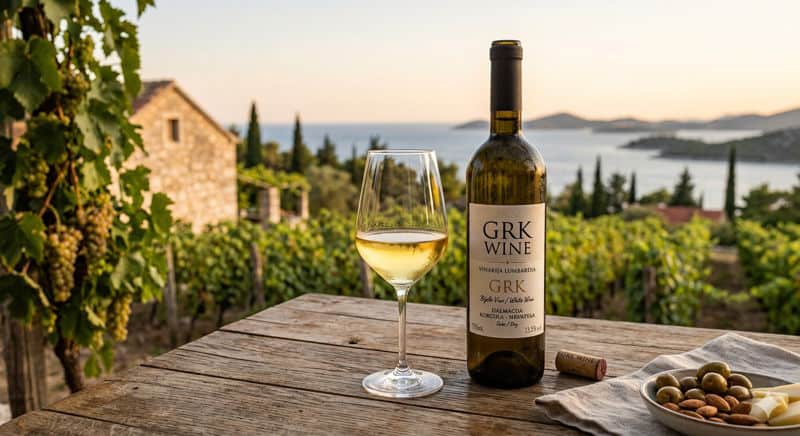
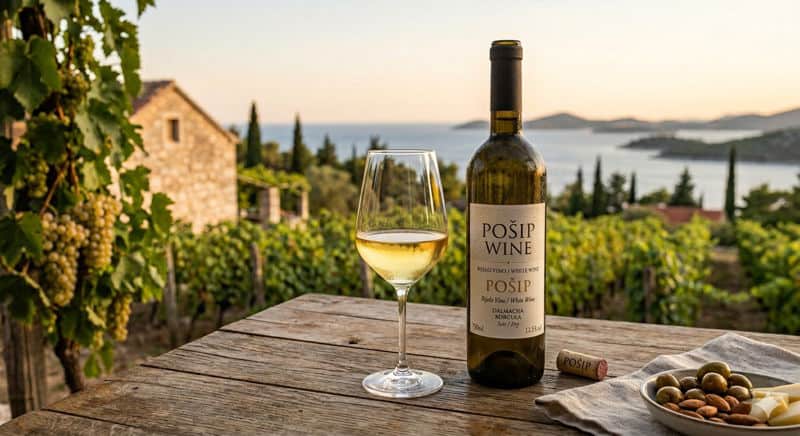
There are wines that are rare. There are wines that are distinctive. And then, occasionally, there is a wine that is genuinely, irreducibly singular — one that exists in a single village, on a single island, growing on vines so botanically unusual that no winemaker elsewhere on earth can replicate them even if they tried. Grk wine Croatia offers precisely this kind of irreplaceable experience, and yet it remains one of the best-kept secrets in European wine culture.
Grk wine (pronounced GURRK, one syllable, with a rolling “r”) is a dry, mineral-forward white wine made exclusively from a grape variety that grows, as far as anyone knows, only in the sandy fields of Lumbarda — a small village on the eastern tip of Korčula Island, on Croatia’s Dalmatian coast. This is not a marketing claim. This is geology, botany, and millennia of human history conspiring together to produce something that simply cannot exist anywhere else.
For wine lovers, sommeliers, and curious travelers, Grk wine Croatia represents one of those rare discoveries that fundamentally expands your understanding of what wine can be. It is lean, saline, intensely mineral, with a precision that recalls the finest Chablis — but with a character that is entirely its own. It is a wine that tastes of the Adriatic itself: clean, slightly salty, crystalline.
This guide covers everything you need to know: what Grk is, where it comes from, how it tastes, how it is made, what to eat with it, and how to get yourself to Lumbarda to taste it at the source.
What Is Grk? The Indigenous Croatian Grape
A Botanical Curiosity Unlike Any Other
Grk is an indigenous Croatian grape variety — ancient, genetically distinctive, and botanically extraordinary. It is one of the very few female-only vine varieties in the world of viticulture, which is not simply an interesting footnote: it is the reason the wine exists only in one place on earth, and it is central to understanding everything unusual about Grk wine Croatia.
In viticulture, most grape varieties are hermaphroditic — their flowers contain both male and female reproductive organs, allowing the vine to pollinate itself. Grk is different. The Grk vine produces only female flowers. It cannot self-pollinate. Without a nearby pollinator, the Grk vine will flower but set no fruit. The vineyards would produce nothing.
In practice, this means that Grk has historically been planted in close proximity to Plavac Mali, the famous red Croatian grape variety, whose male flowers provide the pollen Grk needs to set fruit. In traditional Lumbarda vineyards, rows of Grk were interspersed with rows of Plavac Mali specifically as pollinators. This is an arrangement that evolved over centuries of empirical observation — farmers understood the biology even before the botany had a name for it.
What “Female Vine” Means in Viticulture
The female-only flowering characteristic makes Grk one of a tiny number of such varieties anywhere on the planet. It means the variety is inherently dependent on human management of the vineyard environment. Without that careful relationship between Grk and its pollinator, there is no wine. The vine is generous but demanding: it requires a partner, a community, a tradition of knowledge passed down through generations.
This biological reality is also one of the reasons Grk wine cannot simply be transplanted elsewhere. You cannot take a cutting, plant it in California or Burgundy or the Mosel, and expect wine. You need the right pollinator, the right planting arrangement, the right accumulated knowledge — and then, critically, the right soil.
Ancient Origins: A Name That May Tell Its Own Story
DNA analysis confirms what the historical record suggests: Grk is a genuinely ancient variety. Its genetic profile does not closely match any modern mainstream European cultivar, placing it among the indigenous varieties of the eastern Adriatic that predate centuries of viticultural exchange with Western Europe.
The name “Grk” itself is intriguing. In Croatian, “Grk” means “Greek” — and given the documented Greek colonial presence on Korčula Island dating back to the 4th century BC, the possibility that the name preserves a memory of Greek settlers who brought or cultivated the vine is difficult to dismiss. Whether Grk is literally a Greek import, a native variety that the Greeks encountered and began cultivating, or a variety that received its name for other reasons, the connection to antiquity is real.
Thick-Skinned, Heat-Tolerant, Late-Ripening
Agronomically, Grk is a variety built for the Mediterranean. It is thick-skinned, which helps it resist the desiccating heat of the Dalmatian summer. It is heat-tolerant in ways that thin-skinned northern European varieties are not. And it is a late ripener — the harvest typically does not occur until late September or early October, making Grk one of the last white wines harvested in Dalmatia each year. This extended hang time on the vine, combined with the unique sandy terroir of Lumbarda, is part of what gives Grk wine its distinctive character.
Lumbarda — The Only Place on Earth Where Grk Grows
A Village at the Eastern Edge of Korčula
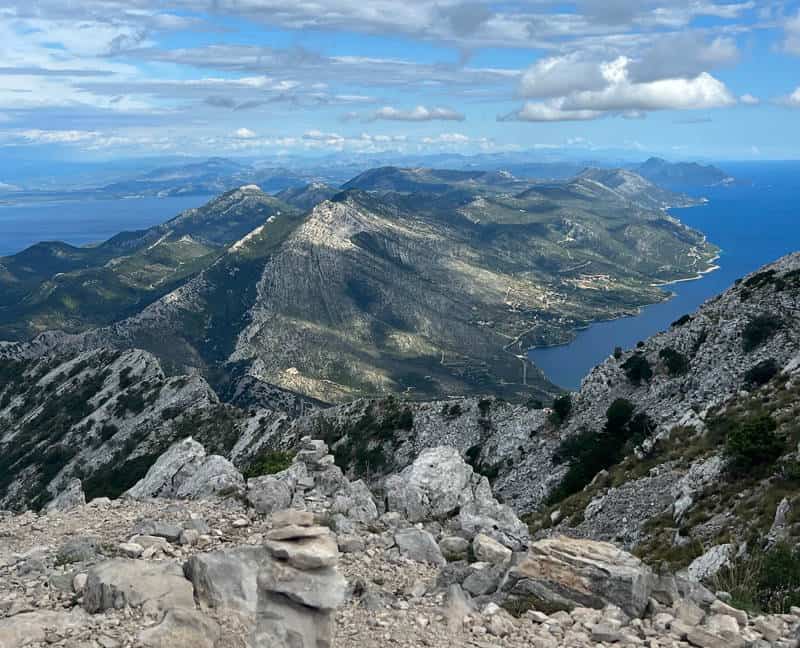
Korčula is a long, narrow island off Croatia’s Pelješac Peninsula, famous for its medieval walled town, its claim to be the birthplace of Marco Polo, and — among wine lovers — as the home of two extraordinary indigenous white wines: Grk and Pošip. Korčula wine culture is among the richest and most historically layered in all of Croatia.
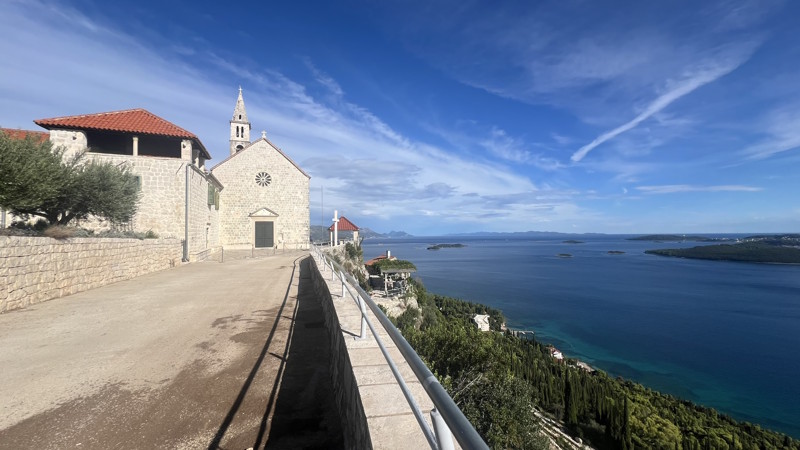
Lumbarda sits at the island’s eastern tip, about six kilometers from Korčula Town. It is a quiet village of whitewashed stone houses, fig trees, and roadside vines, with the Adriatic visible from almost every angle. It is here, and only here, that Grk wine is made.
The Geological Accident That Made It All Possible
The reason Grk grows only in Lumbarda is not tradition or coincidence — it is geology. Korčula Island, like most of the Dalmatian coastline, is composed primarily of limestone and clay soils. These soils are well-suited to viticulture and produce the rich, structured wines for which Dalmatia is known. But Lumbarda is different.
Lumbarda sits on a geological anomaly: a flat, sandy plain known locally as the polje (field). This sandy substrate is unlike anything else on Korčula or, indeed, anywhere in this part of Dalmatia. The sand arrived here through a combination of geological processes over millennia — river sediment, aeolian deposition, ancient coastal dynamics — creating a pocket of light, free-draining, mineral-rich sandy soil in an otherwise limestone landscape.
This sandy terroir is integral to what Grk wine is. The light soil drains rapidly, stressing the vine and encouraging it to send roots deep in search of water and nutrients. The mineral content of the sand expresses itself directly in the wine’s flavor profile — that distinctive saline, stony quality that makes Grk wine Croatia so memorable. The pale color and lightness of the sand also reflects heat rather than retaining it, moderating the temperature that the roots experience even during the hottest Dalmatian summers.
The Lumbarda Polyptych: Greeks, Vines, and the Oldest Document in Croatia
The Greek connection to Lumbarda is not merely etymological. In the 19th century, archaeologists discovered the Lumbarda Polyptych — a stone inscription dating to the 4th century BC, written in ancient Greek, recording the allocation of land to Greek colonists on the island. This document is one of the oldest surviving written records in Croatia, a fragment of ancient civic life preserved in stone for more than two thousand years.
The Polyptych does not mention wine specifically, but it records the settlement and land allocation that would almost certainly have included viticulture — the Mediterranean colonial economy was built on olive oil, grain, and wine. The presence of Greek settlers in Lumbarda at precisely the period when indigenous grape cultivation was expanding across the Adriatic world makes the connection between Greek culture and the origins of Grk wine culturally if not yet scientifically verifiable.
What is clear is that viticulture in Lumbarda has roots so deep they predate the Roman Empire. This is not a modern wine region finding its identity — it is a region with an unbroken thread of winemaking culture stretching back more than two millennia.
The Terroir: Sea, Sand, and Two Horizons
Lumbarda’s terroir combines several elements that work together to shape Grk wine’s character. The sandy soil provides rapid drainage and mineral intensity. The flat topography of the polje means the vines receive full sun exposure throughout the day without the elevation or slope advantages of hillside vineyards. The sea is visible from almost every vineyard — and not from one direction, but from two, as Lumbarda is positioned on a finger of land where the sea approaches from both north and south, delivering cooling breezes that moderate the heat and help preserve the grape’s natural acidity.
The growing area for Grk is tiny. Estimates vary, but the cultivated zone amounts to only a few hundred hectares at most — and not all of those are planted with Grk. In global wine terms, this is a micro-appellation so small it barely registers. Total annual production is modest, which is one reason why Grk wine Croatia remains relatively unknown outside specialist wine circles and Dalmatian visitors.
The Taste of Grk Wine
A Wine That Thinks in Straight Lines
If Pošip — Korčula’s other famous white — is the warm, generous, aromatic sibling, then Grk is the precise, restrained, mineral-driven counterpart. Where Pošip offers body and roundness, Grk offers clarity and tension. Where Pošip can be a wine for contemplation, Grk is a wine for sharpening.
The typical flavor profile of Grk wine Croatia begins with a pale straw-yellow color, sometimes with faint green highlights, reflecting its relatively low alcohol and lean extraction. The nose is subtle rather than aromatic: lemon zest, grapefruit pith, green apple, and white flowers, with a distinctive chalky, stony undertone that speaks directly to the sandy terroir. There is nothing showy about Grk on the nose — it does not announce itself with tropical fruit or heavy oak. It waits.
On the palate, Grk comes alive. The acidity is high and clean — a characteristic that makes the wine feel almost electric on the tongue. The body is lean, medium-weight at most, and the texture is precise and almost crystalline. Citrus flavors dominate: lemon, grapefruit, sometimes a hint of lime. Green apple adds freshness. And then, on the finish, comes the quality that most distinguishes Grk from almost any other white wine in Croatia: a long, saline, mineral aftertaste that evokes sea spray and wet stone. This is the Adriatic in a glass.
How Sandy Soil Expresses Itself in the Wine
The relationship between Lumbarda’s sandy substrate and the character of Grk wine is direct and demonstrable. Light sandy soils stress the vine, produce lower yields, and result in wines with greater mineral concentration and less residual sugar than the same grape variety might produce on richer clay or limestone soils. The rapid drainage of sand prevents waterlogging and forces the vine’s roots to work harder, reaching deeper for moisture and pulling up dissolved minerals as they do so. These minerals — particularly the sodium and calcium compounds common in coastal sandy soils — express themselves in the wine as that saline, stony finish that is Grk’s most recognizable quality.
Comparing Grk to Familiar Benchmarks
Wine lovers approaching Grk wine for the first time often find useful reference points in wines they already know. The closest analogy in the classical canon is Chablis — particularly premier cru Chablis, with its sharp acidity, lean body, and intense mineral character. Like Chablis, Grk is not a wine that impresses through richness or power; it impresses through precision and persistence.
Compared to Sauvignon Blanc, Grk is less herbaceous, less openly aromatic, and considerably more mineral. It lacks the grassy, elderflower, or tropical fruit notes that characterize many Sauvignon Blancs. Where Sauvignon Blanc tends to reach outward and announce itself, Grk tends inward, toward restraint and depth.
Technical Profile
Grk wine typically presents with the following characteristics:
- Color: Pale gold to straw yellow, sometimes with green reflections
- Acidity: High, clean, refreshing
- Body: Light to medium
- Alcohol: 12–13.5% ABV
- Finish: Long, saline, mineral
- Aging potential: Mostly best drunk young, within 1–4 years of vintage; some aged versions can develop beautifully over 6–8 years
Grk Wine Styles
Classic Unoaked Grk: Pure Terroir Expression
The most common and widely available style of Grk wine Croatia is unoaked, stainless steel-fermented Grk. This approach preserves the grape’s natural acidity and mineral character without the intervening influence of wood. The result is the purest expression of Lumbarda’s terroir: bright, fresh, saline, immediate. This is the style to seek out for a first introduction to Grk wine, and it is the style most producers have championed for generations.
Barrel-Aged Grk: Complexity with Care
A small number of producers in Lumbarda are experimenting with barrel-aged Grk, fermenting or maturing the wine in oak — typically older, neutral barrels that add texture and complexity without overwhelming the grape’s delicate mineral character. Done well, barrel-aged Grk develops a creamier texture and notes of toasted almond and brioche alongside the underlying citrus and mineral base. Done poorly, oak can swamp everything that makes Grk distinctive. The best examples are wines of real ambition and considerable interest.
Late Harvest and Sweet Grk: Rare and Exceptional
Perhaps the most extraordinary style of Grk wine is the late harvest or botrytis-influenced sweet version, made in very limited quantities when conditions allow. The grape’s high acidity is perfectly suited to the production of sweet wine — it provides the structural backbone that prevents richness from becoming cloying. Sweet Grk is a rarity that few wine lovers outside of Dalmatia have ever encountered, but it is worth seeking out on any tasting room visit to Lumbarda.
Orange and Skin-Contact Grk: The Natural Wine Frontier
A handful of progressive producers are exploring skin-contact or orange wine techniques with Grk — macerating the grape skins in the fermenting juice to extract additional phenolic compounds, color, and texture. This approach produces wines with a deeper amber color, more tannin, and a broader aromatic range that can include dried apricot, chamomile, and wild herbs. It is an experimental style that sits at the intersection of ancient winemaking tradition (skin contact is among the oldest winemaking techniques in existence) and contemporary natural wine culture.
Grk vs. Pošip — Korčula’s Two Whites Compared
Two Wines, One Island, Completely Different Characters
Anyone visiting Korčula Island with wine in mind will quickly encounter the island’s two signature white wines: Grk wine Korčula and Pošip. They are made on the same island, from indigenous Croatian grape varieties that have been cultivated here for centuries, and they could not be more different.
Characteristic | Grk | Pošip |
Body | Light to medium | Medium to full |
Acidity | High, crisp | Medium to high |
Aromatics | Restrained, mineral | Expressive, floral |
Terroir | Sandy, coastal | Limestone, elevated |
Color | Pale straw | Deeper gold |
Flavor Notes | Citrus, mineral, saline | Pear, peach, almond, honey |
Typical Alcohol | 12–13.5% | 13–14.5% |
Best With | Seafood, raw shellfish | Richer fish, pasta, white meat |
Choosing Between Them
The question “Grk or Pošip?” is one of the most pleasurable decisions a visitor to Korčula can face. For a hot afternoon on the terrace with a plate of fresh shellfish, Grk wine is the obvious choice: its high acidity, light body, and mineral salinity are custom-built for this experience. For a more substantial meal — grilled fish with capers and olive oil, pasta with seafood, or even a light white meat dish — Pošip’s fuller body and more generous aromatics make it the better companion.
The ideal introduction to Korčula wine, however, is not a choice between them but a tasting of both. Many tasting rooms in both Lumbarda and Korčula Town offer exactly this: a Grk and Pošip tasting served side by side, allowing the visitor to experience the full range of what this small island’s extraordinary indigenous grape varieties can produce. The contrast is instructive and immediately memorable.
Food Pairing with Grk Wine
Born for the Sea
If there is one food category that Grk wine Croatia was made for, it is seafood — and within seafood, it reaches its greatest heights with raw and simply prepared shellfish. The wine’s bracing acidity and saline minerality act almost as a seasoning, cutting through the briny sweetness of fresh shellfish and leaving the palate refreshed and ready for the next bite.
Raw oysters are the canonical pairing, and for good reason. The combination of fresh oyster brine and Grk’s mineral salinity creates a flavor loop of astonishing depth and satisfaction. Mali Ston oysters — grown in the bay of Mali Ston at the base of the Pelješac Peninsula, a short distance from Korčula — are among the finest oysters in Europe, and a glass of Grk wine alongside them is one of the great simple pleasures of the Dalmatian coast.
Sea urchin is another exceptional pairing: the iodine richness of fresh urchin is precisely what Grk’s acidity and mineral backbone are designed to balance. Fresh clams and scallops respond equally well, as do cuttlefish prepared with olive oil and garlic.
Grilled Fish and Simple Preparations
For grilled fish, Grk wine is the natural partner on the Dalmatian table. Sea bass (brancin), sea bream (orada), and dentex (zubatac) are the great fish of the Adriatic, and they reward the same kind of precision that Grk delivers. The wine’s acidity lifts and enlivens the clean, delicate flavor of these fish without competing with it.
Shellfish pasta and seafood risotto are excellent pairings for a slightly richer style of Grk — particularly a lightly barrel-aged version, which has the texture to stand up to the creaminess of a risotto while still providing the acidity the dish needs.
Light, young cheeses — fresh goat’s cheese, young Dalmatian pašta sira, fresh ricotta — and light charcuterie can work well as an aperitif pairing, particularly when accompanied by the crusty local bread and good olive oil.
An Unexpected Partnership: Grk and Japanese Cuisine
One pairing that surprises visitors who encounter it: Grk wine and Japanese cuisine. The wine’s saline minerality, restrained aromatics, and high acidity create extraordinary resonance with sushi, sashimi, and other clean, delicate preparations rooted in ocean ingredients. This is not a coincidence — the same terroir qualities that make Grk the ideal partner for Adriatic shellfish make it work beautifully with Japanese seafood culture. Sommeliers in Zagreb and Dubrovnik have been quietly championing this pairing for years.
What to Avoid
Grk wine’s delicacy is its strength, but it is also its limitation. Heavy cream sauces will overwhelm the wine’s mineral subtlety. Red meat is simply too much for its light body and acidity to engage with meaningfully. Heavily spiced food will mask the wine’s restrained aromatics. Grk is a wine of precision — it rewards food that meets it with equal clarity.
The Grk Harvest — September in Lumbarda
The Last White of the Season
Grk is a late-ripening variety, and harvest typically does not begin until late September, sometimes extending into the first days of October. By this point in the Dalmatian calendar, many other white grape varieties have already been picked, the tourist crowds of summer have thinned, and Lumbarda settles into a quieter, more contemplative rhythm.
The late harvest timing is not a disadvantage — it is part of what makes Grk distinctive. The extended hang time on the vine, under the moderating influence of September sea breezes, allows the grape to develop full phenolic ripeness while retaining the high acidity that is central to its character. Grapes harvested too early will be sharp and underripe; those harvested too late will lose the freshness that makes Grk so vital. The harvest decision requires experience, attention, and the kind of intimate knowledge of a specific vineyard that can only be accumulated over years.
Hand-Picking in Sandy Fields
Because Lumbarda’s polje is flat and sandy, the terrain presents different challenges from the dramatic hillside viticulture found elsewhere in Dalmatia. Machine harvesting is not typical for quality Grk production — hand-picking allows selective harvesting of only the ripest clusters and prevents the bruising and premature oxidation that can occur when grapes are mechanically harvested. The sandy soil is soft underfoot, which makes hand-picking physically easier than on rocky hillsides, but the flatness also means full sun exposure for the harvesters throughout the day.
In the Winery: Minimal Intervention, Maximum Precision
The winemaking philosophy for unoaked Grk is one of minimal intervention. The goal is to capture what the vineyard and the vintage have produced, not to transform or embellish it. Grapes are gently pressed to avoid extracting harsh phenolics from the thick skins. Fermentation takes place at cool temperatures — typically in stainless steel tanks — to preserve the wine’s delicate aromatics and acidity. Aging on the lees is common, adding a subtle creaminess and complexity to the wine without obscuring its essential character.
Visiting Lumbarda — The Grk Wine Village
Getting There from Korčula Town
Lumbarda is approximately six kilometers from Korčula Town, making it easily accessible by multiple means. Bicycle is perhaps the most enjoyable option: the road from Korčula Town to Lumbarda is largely flat — it follows the low-lying terrain of the island’s eastern peninsula — and the 30-minute ride takes you through pine forests and past vineyard views before arriving at the sandy bay of Lumbarda itself. Bicycles can be rented in Korčula Town.
For those who prefer motorized transport, the drive by scooter or car takes less than 15 minutes. A local bus service also connects Korčula Town and Lumbarda, running several times daily during the summer season and less frequently outside it.
What to See in Lumbarda
The village itself is small and unhurried. Its main natural attraction is Vela Przina — one of the very few sandy beaches on the entire Dalmatian coast. Most Croatian beaches are pebbled or rocky; Vela Przina, with its gently shelving sand and clear, shallow water, is an anomaly that reflects the same geological formation that makes Grk wine possible. The beach sits at the edge of the sandy polje where the Grk vines grow, meaning that on a summer afternoon you can look out from the water and see the vineyards directly.
The vineyards themselves are scattered through the flat fields behind the village — an unusual sight for anyone accustomed to Dalmatian hillside viticulture. The vines are low-growing, trained close to the sandy ground, and in late summer you can see the thick clusters of Grk grapes developing in the gentle afternoon light.
Tasting Rooms and Winery Visits
Several winemaking families in Lumbarda open their cellars and tasting rooms to visitors, offering tastings of Grk wine alongside the opportunity to purchase bottles directly — by far the best way to buy Grk wine if you are visiting. Tasting room hours vary by producer and season, but the summer months and the harvest period of September and October are the most reliable times to find producers open and willing to share their wines and their stories.
The conversations that take place in these cellars — with families whose connection to these vineyards stretches back generations, who can point to their grandfather’s vines and explain which rows are planted as pollinators — are among the most memorable wine experiences available anywhere in Croatia.
Best Time for Wine Tourism
For wine tourism in Lumbarda, two periods stand out. Late September and early October offer the extraordinary experience of the harvest itself: the smell of ripe grapes in the September heat, the sight of families working the rows, the energy of a small community engaged in an annual ritual that has been performed here since antiquity. Spring (April–May) is another excellent time: the vineyards are green and flowering, the village is quiet, and tasting rooms are accessible without the summer crowds. Wine tourism in Lumbarda is genuinely low-key and personal — this is not Napa Valley, and that is very much part of the appeal.
The Perfect Korčula Day
The ideal day in Lumbarda combines both of its great offerings: a morning bicycle ride from Korčula Town along the island road, arriving in Lumbarda for a vineyard visit or tasting room session, followed by lunch at the village — oysters, grilled fish, fresh bread — with a glass of Grk wine sweating gently in the summer heat, and an afternoon on Vela Przina beach as the light turns golden. This is not a complicated itinerary. It is simply a very good day in one of Croatia’s most underrated corners.
How to Buy Grk Wine
Buying Direct: The Best Option
The optimal way to acquire Grk wine is to buy directly from producers in Lumbarda. Prices are typically lower than in shops, the selection is wider, and the wines are fresher and better stored. Many families will sell by the case as well as by the bottle, which matters if you want to bring home more than a few bottles. Direct purchases also support the small community of producers who are keeping Grk wine alive.
Wine Shops in Dalmatia
If you are not visiting Lumbarda directly, quality wine shops in Korčula Town, Dubrovnik, and Split stock Grk wine, though selection varies. Specialist wine shops and delicatessens in these cities are the most reliable sources. Supermarket availability is patchy — Grk is not a volume wine, and most of it is sold through specialist channels.
International Availability
Grk wine Croatia is beginning to find its way to international markets, but it remains genuinely rare outside Croatia. Specialist importers in Germany, Austria, Switzerland, the United Kingdom, and the United States carry Grk wines from select producers, but you will need to seek them out through wine specialist retailers, online wine merchants focused on Central and Eastern Europe, or dedicated Croatian wine importers. In major cities, Croatian wine-focused restaurants occasionally pour Grk by the glass — worth asking for.
What to Look for on the Label
When buying Grk wine, look for the following on the label:
- The word “Grk” prominently displayed (it should be the main grape/wine identification)
- “Lumbarda” or “otok Korčula” (Korčula Island) as the origin designation
- The vintage year — freshness matters, so check it
Grk wine has its own appellation status within Croatia’s wine classification system. Bottles carrying the designation “Grk Lumbarda” or equivalent are protected wines that must meet production standards specific to this tiny zone.
Price Guide
Grk wine Croatia is genuinely good value for the rarity and uniqueness of what you are getting:
- Entry-level, current vintage: €10–18 per bottle
- Premium or aged versions: €18–30 per bottle
- Late harvest or special releases: Can exceed €30, and are worth it
Vintage Guidance
For unoaked, fresh-style Grk, drink within 3–4 years of vintage to enjoy the wine at its most vibrant. The acidity and mineral character are at their most precise and energetic in the first few years after harvest. Some producers’ aged or premium versions — particularly those with barrel influence or extended lees aging — can develop beautifully over 6–8 years, gaining complexity and depth while retaining the essential mineral backbone.
Grk Wine and the Rise of Croatian Wine Tourism
Croatia as an Emerging Wine Destination
Croatian wine has been quietly gaining international respect for several years, and wine tourism is now a recognized pillar of the country’s broader tourism offering. The Dalmatian coast, the Istrian Peninsula, and Slavonia in the continental interior each offer distinct wine cultures and indigenous varieties that have no equivalent elsewhere. For the wine-curious traveler, Croatia rewards those who go looking.
Grk wine Croatia occupies a unique place in this emerging wine tourism landscape. It is not simply a good wine — it is a wine that wine lovers will travel specifically to taste. It is what the wine trade sometimes calls a “unicorn wine”: a wine that exists in such limited quantity, grown under such specific and unreplicable conditions, that tasting it at the source becomes an event in itself rather than simply a beverage choice. Wine journalists, sommeliers, and serious collectors have been making their way to Lumbarda for precisely this reason.
Indigenous Varieties: Croatia’s Greatest Wine Asset
What makes Croatian wine distinctive in the global market is not its ability to produce good Chardonnay or Cabernet Sauvignon — plenty of regions can do that. What makes it irreplaceable is its collection of indigenous Croatian grape varieties: Plavac Mali, the powerful red of the Dalmatian coast; Pošip, the aromatic white of Korčula; Graševina, the workhorse white of Slavonia; Malvazija, the fresh, coastal white of Istria. And Grk — perhaps the most botanically and geographically unique of all.
These varieties cannot be grown elsewhere with the same character. They are the product of specific places — soils, climates, histories, communities — that cannot be relocated. In an era when wine culture is increasingly interested in authenticity, provenance, and the inimitable character of place, Croatian indigenous varieties offer something genuinely scarce: wines that can only come from where they come from.
Grk in the Broader Dalmatian Wine Story
Grk wine Korčula is best understood in the context of the broader Dalmatian wine tradition. On the mainland coast and its islands, Plavac Mali dominates as the great red — particularly in the Dingač and Postup appellations on the Pelješac Peninsula, where it produces wines of extraordinary concentration and power. Alongside Plavac Mali and Grk, Pošip and several other white varieties complete a palette of indigenous Croatian grape varieties that together tell the story of a wine culture shaped by geography, history, and the specific conditions of the eastern Adriatic.
The Science Behind Grk’s Uniqueness
The Biology of the Female Vine
To understand why Grk wine cannot simply be reproduced elsewhere, it helps to understand the botany more precisely. In a normal hermaphroditic grape vine, each flower contains both stamens (which produce pollen) and a pistil (which receives pollen and develops into a grape berry). The vine can fertilize itself, or be fertilized by pollen from nearby vines, but either way it can produce fruit independently.
In a female-only vine like Grk, the flowers contain only a pistil — no functional stamens, no pollen. The vine must receive pollen from an external source to set fruit. Without that pollen, the flower will be fertilized but produce no berry. The vine is entirely dependent on a nearby pollinator.
In Lumbarda’s traditional vineyards, this role has historically been fulfilled by Plavac Mali, whose flowers produce compatible pollen. The traditional arrangement — rows of Grk interspersed with rows of Plavac Mali — is not a choice but a biological necessity. Modern producers have refined their understanding of this relationship, and the management of pollinator planting in Grk vineyards is a significant viticultural consideration.
What This Means for Yields and Economics
The biological dependence on a pollinator has direct economic consequences. Because Grk can only set fruit when viable pollen is available from nearby plants, yields are inherently lower and more variable than in self-fertile varieties. A year with poor pollination conditions — unfavorable weather during the flowering period, insufficient pollinator planting — can dramatically reduce the harvest. This yield variability contributes to the wine’s limited availability and helps explain its pricing.
The labor intensity of Grk viticulture also contributes to cost. Hand-picking is standard. Vineyard management requires attention to both the Grk vines and their pollinators. The sandy terrain requires specific soil management techniques.
Why Grk Cannot Be Grown Elsewhere (Even If Someone Tried)
If a winemaker in Oregon, New Zealand, or South Africa wanted to attempt Grk wine, they would face an accumulation of obstacles that, taken together, are essentially insurmountable. They would need to source viable female-only Grk cuttings — which are controlled and not widely available outside Croatia. They would need to establish the correct pollinator arrangement with Plavac Mali or a suitable substitute. They would need to replicate, somehow, the specific mineral profile of Lumbarda’s coastal sandy soil — a geological formation that does not exist in most of the world’s wine regions. And they would need to wait years for the vines to establish themselves and begin producing fruit of sufficient quality to make wine worth drinking.
The result, even if they succeeded in all of this, would be something different from Lumbarda Grk — because Lumbarda’s Grk is not just a grape variety, it is an expression of a specific, irreplaceable place.
How to Get to Lumbarda and Korčula Island
By Ferry from Split or Dubrovnik
The main gateway to Korčula Island is by ferry or catamaran. Jadrolinija, the Croatian state ferry operator, runs regular services from Split to both Vela Luka (at the western end of Korčula) and Korčula Town. Journey times vary depending on the route and vessel: car ferries typically take 2.5–3 hours to Vela Luka, while high-speed catamarans from Split or Dubrovnik can reach Korčula Town in approximately 2–3 hours.
From Dubrovnik, catamaran services operate seasonally with direct connections to Korčula Town. Timetables change between high season (summer) and low season, so checking current schedules in advance is advisable.
Via Orebić on the Pelješac Peninsula
For travelers arriving by car — whether driving from Dubrovnik along the coast or crossing the Pelješac Bridge — the fastest and most scenic crossing to Korčula is the short ferry from Orebić on the Pelješac Peninsula. This crossing takes approximately 15 minutes and deposits passengers at Korčula Town directly. Jadrolinija car ferries run this route frequently throughout the day, making it the most convenient option for those with a vehicle. The short crossing offers a beautiful introduction to the island: the medieval walls of Korčula Town rise directly ahead as you cross the narrow channel.
By Road: The Pelješac Bridge
The Pelješac Bridge, completed in 2022, connects the Croatian mainland to the Pelješac Peninsula without requiring a crossing through Bosnia and Herzegovina — a significant improvement for drivers traveling from Dubrovnik along the coast. From the mainland near Dubrovnik, the drive along the Pelješac Peninsula to Orebić — where the Korčula ferry departs — takes approximately one to one and a half hours depending on traffic.
From Korčula Town to Lumbarda
Once on the island, reaching Lumbarda from Korčula Town is straightforward:
- Bicycle: The road is largely flat and takes approximately 25–35 minutes. Bicycle rental is available in Korčula Town.
- Scooter or car: 15 minutes on the island road.
- Local bus: A public bus service connects Korčula Town and Lumbarda, running several times daily.
- Taxi or ride-share: Available from Korčula Town.
Grk Wine — Frequently Asked Questions
How do you pronounce Grk?
The pronunciation that catches visitors off guard: GURRK, one syllable, with the “r” rolled or at least clearly pronounced. There is no vowel between the G and the R — the consonant cluster is essentially a syllable unto itself, which is unusual in English but entirely normal in Croatian. Once you hear it pronounced correctly, it sticks immediately.
Is Grk wine dry?
Yes, almost always. The vast majority of Grk wine Croatia produced commercially is dry — fermented to complete dryness, with no residual sugar. The off-dry and sweet styles exist but are rare, made only in exceptional vintages or by producers specifically working in this niche. If you order Grk at a restaurant or tasting room, you should expect a bone-dry wine.
Why can Grk only grow in Lumbarda?
The short answer involves two unique factors working together. First, the sandy soil of Lumbarda’s polje — a geological anomaly in an otherwise limestone-dominated island — creates a terroir that is integral to Grk wine’s character and that does not exist elsewhere on Korčula or in the broader Dalmatian region. Second, Grk is a female-only vine that requires a nearby pollinator to set fruit, an unusual biological characteristic that makes the variety dependent on a carefully managed vineyard ecosystem. Reproduce the soil elsewhere, and you are still missing the viticulture tradition and the biological knowledge. Reproduce the viticulture without the soil, and you will make a different wine. Lumbarda holds the combination of both.
How does Grk taste compared to Sauvignon Blanc?
Grk wine is often compared to Sauvignon Blanc by first-time tasters, but the comparison has limits. Both are high-acid, dry white wines with citrus character. But where Sauvignon Blanc tends toward herbaceous, green, and sometimes tropical aromas — elderflower, cat’s paw, gooseberry, passionfruit — Grk is quieter, more mineral, and more restrained. The saline, stony finish of Grk has no equivalent in most Sauvignon Blanc. A closer comparison might be to Muscadet sur lie, or to unoaked Chablis, but ultimately Grk wine is itself rather than a version of anything else.
Can I find Grk wine outside Croatia?
Yes, but it is genuinely rare. Specialist wine importers in Germany, Austria, Switzerland, the United Kingdom, and the United States have begun listing Grk wines from select Lumbarda producers, and some Croatian wine-focused online retailers ship internationally. In major cities, Croatian restaurants occasionally offer it by the glass. But the easiest and most rewarding way to drink Grk wine is in Croatia — and ideally in Lumbarda itself.
Is Grk wine expensive?
No — and this is one of its most appealing qualities. For a wine that is botanically unique, geographically confined to a tiny production zone, and genuinely unlike anything else in the world, Grk wine Croatia is remarkably affordable. Entry-level bottles from reputable producers sell for €10–18. Premium aged versions reach €18–30. For the experience of drinking something irreplaceable, this is extraordinary value.
Conclusion: A Wine Worth Seeking Out
There is a question that serious wine lovers occasionally ask themselves when confronted with the world’s enormous range of wine choices: which wines are irreplaceable? Not which wines are the best, or the most prestigious, or the most expensive — but which wines could simply not exist anywhere else, made in any other way, from any other place?
Grk wine Croatia belongs on that list. It is made from one of the world’s rarest vine types, grown on a geological formation that exists in only one village, harvested by hand from sandy fields that have been cultivated since at least the time of ancient Greek settlement, vinified with minimal intervention to allow the terroir to speak as clearly as possible. The result is a wine that tastes of its place — of sandy soil and sea breeze, of mineral-rich coastal earth, of the Adriatic’s particular blend of salt and stone.
Grk wine Korčula is not a wine for everyone — its restraint and precision require a palate willing to slow down and listen. But for those who meet it on its own terms, it offers something that increasingly few wines can: the experience of tasting something that exists nowhere else on earth, that has survived through the dedication of a small community on a small island, and that connects anyone who drinks it to a thread of human culture stretching back more than two thousand years.
If you have the opportunity to travel to Korčula Island — to cycle the island road to Lumbarda in the early morning, to sit at a tasting room table with a glass of pale straw-yellow wine and a producer willing to tell you the story of these vines and this soil — take it. And if you find yourself with a bottle of Grk wine Croatia anywhere in the world, open it with something from the sea, and pay attention. It has a great deal to say.