

















Korčula Old Town – The old town not only boasts beautiful sights but also a vibrant local culture that enchants visitors.

The old town not only boasts beautiful sights but also a vibrant local culture that enchants visitors. This place truly embodies the spirit of Croatia, making it an unforgettable experience, to do in korčula town. For those visiting, this area is a treasure trove of history and culture. Many travelers fall in love with this destination, making it a must-visit in Korčula Croatia.
he charm lies in its rich history, where each street tells a story of its past. Exploring the narrow streets reveals countless hidden gems waiting to be discovered. As you explore the charming corners, you will discover the stories that shaped this historic place.
The island of Korčula the old town, located in the southern Adriatic, is a jewel of Croatia and is known for its rich history and breathtaking landscapes. The old town of Korčula, often referred to as “Little Dubrovnik”, impresses visitors with its well-preserved medieval architecture and unique flair. In the narrow streets, surrounded by historic buildings, you quickly feel transported to another time. The cultural and historical significance of the old town makes it an unmissable destination for anyone who wants to discover the beauties of the Croatian coast.
But before we look at the sights of Korčula Old Town, it is important to first mention the history of the city. In the heart of this location, the vibrant culture and atmosphere create an unforgettable experience for travelers. Exploring the narrow streets is like stepping back in time, where every corner reveals more of its historical charm. Every exploration deepens your appreciation for its unique charm.
The allure lies in its rich tapestry of history and culture, providing endless exploration opportunities.
Long before the Venetians arrived, before the medieval walls were built, before anyone had heard of Marco Polo, Korčula was already inhabited. The island’s earliest recorded name is Korkyra Melaina — Black Corfu — a name given by Greek colonists from the island of Corfu who settled here around the 4th century BC. The name likely referred to the island’s dense forests of Aleppo pine and holm oak, which gave the landscape a deep, dark character from the sea.
After the Greeks came the Romans, and after the Romans came the early medieval Slav settlers who blended with the existing Illyrian-descended population. By the time Korčula is mentioned clearly in medieval records — around the 9th century AD — it was already a well-established community with its own bishop, its own traditions, and its own sense of place.
The defining chapter of Korčula Old Town’s history is its long association with Venice. The town passed in and out of Venetian control over several centuries, but Venice held it for most of the period between 1420 and 1797 — nearly four hundred years. The Venetians left an indelible mark on everything: the architecture, the street plan, the heraldic carvings above doorways, the winged lion of St. Mark that still appears on monuments throughout the town.
The medieval street grid that visitors walk today owes much to Venetian urban planning, though it was adapted with considerable local intelligence. The famous herringbone layout of the streets — which we will explore in more detail shortly — was partly a Venetian innovation and partly a response to the island’s specific geography and climate.
The town walls were substantially reinforced and expanded during the Venetian period, particularly in response to the very real threat of Ottoman expansion in the Adriatic. The towers, the bastions, the fortified sea gate — all of these were built and improved during the 15th and 16th centuries as the Ottoman fleet became an increasing presence in these waters.
No discussion of Korčula Old Town history is complete without addressing what is both the town’s most famous claim and its most disputed one. According to local tradition — persistent, deeply held, and fiercely defended — Marco Polo, the great Venetian explorer and traveler, was born in Korčula in 1254.
The argument for a Korčulan birth rests on several points. Marco Polo’s family were originally from Korčula. The town was at the time under Venetian administration. And in 1298, Marco Polo himself was captured by the Genoese during the naval Battle of Curzola, fought in the very waters around Korčula — a curious coincidence, if it is a coincidence at all.
Historians are divided. Venice also claims Marco Polo as a son. The documentary evidence is thin on both sides. But Korčula’s claim has enough substance to it — and enough local passion behind it — that a visit to the Marco Polo House has become one of the most popular things to do in Korčula Old Town.
Whatever the truth of his birthplace, the Marco Polo connection matters to Korčula in a way that goes beyond tourism. It speaks to the town’s sense of itself as a place of consequence, a place connected to the wider world, a place that produced people who went out and changed history.
The naval battle of 1298, mentioned above, was one of the defining military engagements of the medieval Adriatic. The Genoese fleet defeated the Venetian fleet in these waters, and Marco Polo — then a Venetian naval commander — was taken prisoner. He would spend the next year in a Genoese prison, and it was during this captivity that he dictated his famous account of his travels to a writer named Rustichello of Pisa. If the Genoese had not won that battle, The Travels of Marco Polo might never have been written.
The town itself withstood numerous attacks over the centuries. Turkish pirate raids were a constant threat throughout the 16th and 17th centuries. The citizens of Korčula Old Town developed not only strong walls but also strong traditions of civic defense — traditions that find an echo in the Moreška sword dance, which we will explore at length later in this guide.

The heart of Korčula Old Town, both geographically and spiritually, is the Cathedral of St. Mark. It dominates the main square — Trg Sv. Marka — and its bell tower can be seen from anywhere in town and from the sea for miles around.
Construction of the cathedral began in the late 14th century and continued well into the 15th and 16th centuries, which means it represents a blend of Gothic and Renaissance styles that tells the story of the town’s own architectural evolution. The facade is a masterpiece of Dalmatian stone carving. Look closely at the rose window — a beautiful circular composition of delicate tracery that frames the entrance. Look at the tympanum above the main door, where a relief of St. Mark himself presides over those who enter. Look at the figures carved into the columns flanking the portal — creatures half-human and half-fantastical, a reminder that medieval stone carvers had a sense of humor along with their piety.
The interior is cool and dim after the brightness of the square outside. The nave is simple but noble, the stone columns solid and enduring. Among the artworks inside, seek out the altarpiece attributed to the Venetian master Jacopo Tintoretto — a remarkable painting that has survived here for over four centuries. A ciborium in the cathedral, an elaborate canopied structure above the altar, is one of the finest examples of this form in Dalmatia.
Visiting the cathedral is free, though a small donation is always welcome. Modest dress is expected — shoulders and knees covered. The experience of attending an evening mass here, with the stone walls lit by candlelight and the voices of the choir filling the space, is one of those things you will not soon forget.
St. Mark’s Cathedral, or Sveti Marko, is the central architectural highlight and a significant example of Gothic-Romanesque architecture. Built in the 15th century, this impressive cathedral stands majestically above the town’s main square. The cathedral’s façade is decorated with numerous sculptures and reliefs depicting biblical scenes and saints.
Many visitors flock to admire the stunning beauty of St. Mark’s Cathedral. Be sure to take in the ambiance as you marvel at the cathedral’s intricate details.
Visiting Marco Polo’s Birthplace offers a fascinating glimpse into the life of the legendary explorer.

The heart of Korčula Old Town, both geographically and spiritually, is the Cathedral of St. Mark. It dominates the main square — Trg Sv. Marka — and its bell tower can be seen from anywhere in town and from the sea for miles around.
Construction of the cathedral began in the late 14th century and continued well into the 15th and 16th centuries, which means it represents a blend of Gothic and Renaissance styles that tells the story of the town’s own architectural evolution. The facade is a masterpiece of Dalmatian stone carving. Look closely at the rose window — a beautiful circular composition of delicate tracery that frames the entrance. Look at the tympanum above the main door, where a relief of St. Mark himself presides over those who enter. Look at the figures carved into the columns flanking the portal — creatures half-human and half-fantastical, a reminder that medieval stone carvers had a sense of humor along with their piety.
The interior is cool and dim after the brightness of the square outside. The nave is simple but noble, the stone columns solid and enduring. Among the artworks inside, seek out the altarpiece attributed to the Venetian master Jacopo Tintoretto — a remarkable painting that has survived here for over four centuries. A ciborium in the cathedral, an elaborate canopied structure above the altar, is one of the finest examples of this form in Dalmatia.
Visiting the cathedral is free, though a small donation is always welcome. Modest dress is expected — shoulders and knees covered. The experience of attending an evening mass here, with the stone walls lit by candlelight and the voices of the choir filling the space, is one of those things you will not soon forget.
The city walls tell tales of its past, serving as a stronghold throughout the centuries. The city walls are not just fortifications; they are a reminder of the town’s storied past.

The medieval defenses of Korčula Old Town are among the best-preserved in Croatia. Walking along the surviving sections of the city walls gives you a visceral sense of how this town felt to its medieval inhabitants: protected, positioned, always aware of the sea and what it might bring.
The Land Gate — Kopnena vrata — is the main entrance to the old town from the landward side, and it is one of the finest pieces of defensive architecture on the Adriatic coast. A triumphal arch was added above it in the 17th century, incorporating a Venetian winged lion and a statue of St. Mark, transforming a purely military structure into something that proclaimed civic pride as well as military strength. Passing through the Land Gate today, you still feel the weight of those centuries.
The Tower of All Saints, the Large Governor’s Tower, the Small Governor’s Tower — these circular and polygonal bastions punctuate the walls at strategic intervals, providing overlapping fields of fire that would have made any naval assault extremely costly. Several of the towers can be entered, and the views from their upper levels are spectacular.
The sea walls on the southern and western sides of the old town are particularly dramatic. Here the walls drop almost directly into the water, and on a rough day the waves slap against the base of the stone with enough force to send spray onto the promenade above. On a calm summer evening, the promenade that runs along the base of the walls is one of the finest walks in Dalmatia — locals and visitors alike stroll here in the long Mediterranean dusk, the old town rising above them and the Pelješac Peninsula visible across the water.
One of the most distinctive features of Korčula Old Town — and one that often surprises visitors when they first see it on a map — is the street plan. The streets are arranged in a herringbone or fishbone pattern, radiating diagonally from the central spine of the main street. This is not an accident. It is one of the earliest examples of deliberate urban planning in the eastern Adriatic.
The design was almost certainly intentional from the beginning, though it was developed and refined over centuries. The diagonal arrangement of the side streets serves several functions simultaneously. It reduces the force of the bora wind — the cold, powerful northeasterly that sweeps down from the Dinaric Alps and can be brutal in winter — by preventing it from channeling directly through the streets. It creates natural shade during the hottest parts of the day, as the angled lanes are not in direct sunlight for long periods. And it provides natural drainage for rainwater, which runs down the sloping lanes toward the sea.
Walking through these lanes is one of the purest pleasures Korčula Old Town offers. They are narrow enough that two people walking abreast can reach out and touch both walls. The stone is worn smooth by centuries of feet. Potted geraniums spill from windowsills. Laundry dries on lines stretched between windows three stories above your head. The smell of coffee and fresh bread drifts from open doorways. There is no better way to spend a morning than simply getting lost in here.
The Land Gate is the grand entrance, ushering visitors into its rich history. The Land Gate welcomes you, a gateway to its rich and vibrant history. Entering through the Land Gate transports you to a time when this city thrived as a trade hub.

Exploring the sights begins at the impressive city gate, which together with the monumental staircase forms a majestic entrance. The city gate, known as the Land Gate, was built in the 17th century and is an excellent example of the Venetian architecture that shapes the history and heritage of the city.
Don’t miss the Town Museum for a deeper understanding of its past.
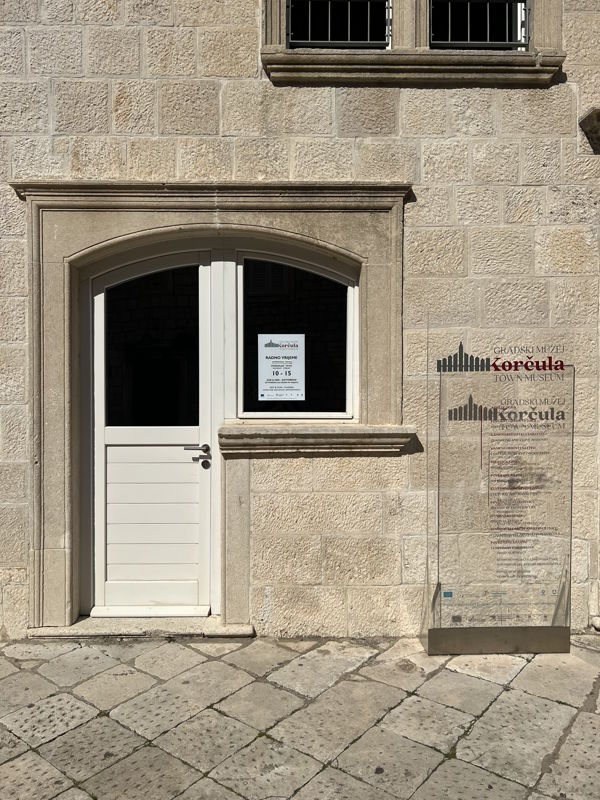
The Town Museum, located in the historic 16th-century Gabrielis Palace, offers visitors an in-depth look into the rich history and cultural heritage of the town and the island. Its most significant exhibits include archaeological finds dating back to prehistoric times, including tools, ceramics and other artifacts that shed light on early life and settlement.
The Town Museum provides valuable context about the historical significance.
Strolling through the alleys reveals its vibrant history and cultural significance. Every alley tells a story, making it a captivating destination for history buffs.
This area is a veritable labyrinth of narrow, cobbled streets and picturesque squares that take visitors on a journey back in time. A stroll through these alleys is like a journey through history. The narrow streets, often lined with high stone walls, open up into small squares surrounded by historic buildings, cozy cafes and traditional restaurants.
Of all the things to experience in Korčula, the Moreška sword dance may be the most extraordinary. It is a theatrical battle performed with real swords, telling a story of conflict between two kings — the Black King and the White King — over a kidnapped princess named Bula. The dancers wear elaborate costumes of red and black, and the performance combines choreography, swordplay, and music in a way that is genuinely thrilling to watch.
The Moreška has been performed in Korčula for at least four hundred years, and possibly much longer. Its origins are complex and debated. The name itself derives from Moor — the performance is part of a wider tradition of “Moorish dances” and theatrical battle representations that existed across the Mediterranean during the medieval and early modern periods, from Spain to Malta to the Dalmatian coast. These dances typically represented the conflict between Christians and “Moors” or Turks — the great religio-political division of the medieval Mediterranean.
In Korčula’s version, the story has evolved over centuries to take on a distinctly local flavor. The Black King and the White King are no longer explicitly Christian and Muslim but simply adversaries fighting for love and honor. The performance has absorbed local music, local costumes, and local movement traditions until it has become something entirely of this place.
What is remarkable is that the Moreška is not a reconstructed or revived tradition — it was never lost. It has been performed continuously in Korčula for centuries, passed down from generation to generation, with the sword-fighting techniques and choreography preserved through direct transmission from masters to students. Watching it is watching something genuinely alive
During the summer season — roughly from May through October — the Moreška is performed regularly in Korčula Old Town, typically on Thursday evenings and sometimes more frequently in peak season. Performances take place in an outdoor arena near the Land Gate, where tiered seating surrounds the performance space.
The performance lasts approximately one hour and is narrated in Croatian, but the visual drama makes the story fully comprehensible regardless of language. The swords are real. The sound they make when they clash — a sharp, ringing clatter that echoes off the stone walls — adds a visceral energy to the performance that no stage prop could replicate.
Tickets should be purchased in advance during the busy summer months, as performances regularly sell out. The Thursday evening performance in particular tends to fill up, so booking a day or two ahead is wise. Prices are modest by European standards — entirely worth it for an experience you will find nowhere else on earth.
Even if you cannot attend a full performance, it is worth trying to catch a rehearsal or a brief demonstration. The Moreška society practices year-round, and the skill and dedication of the performers — many of whom have been involved since childhood — is evident in every movement.
The Moreška is not the only sword dance tradition on Korčula island. Several villages have their own versions — the Kumpanija and the Mostra — each with their own distinctive costumes and steps. But the Moreška is the most spectacular and most accessible for visitors staying in or near Korčula Old Town.
The best way to get here is by ferry from the Croatian mainland. There are frequent ferry connections from cities such as Split, Dubrovnik and Drvenik. The crossing offers breathtaking views of the Adriatic coast and the surrounding islands. It is best to explore sights on foot to fully enjoy the narrow streets and hidden squares. For longer distances on the island, bicycles can be rented, which is an environmentally friendly and active way of exploring.
To fully appreciate the charm, take your time wandering through its picturesque streets. End your day by soaking in the sunset views from the city walls. As you watch the sunset from the city walls, you’ll realize the magic of this destination.
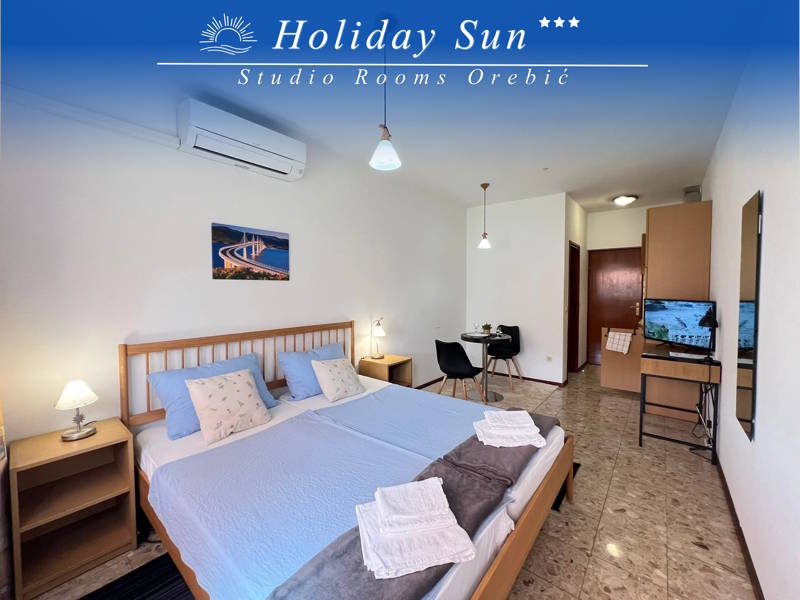
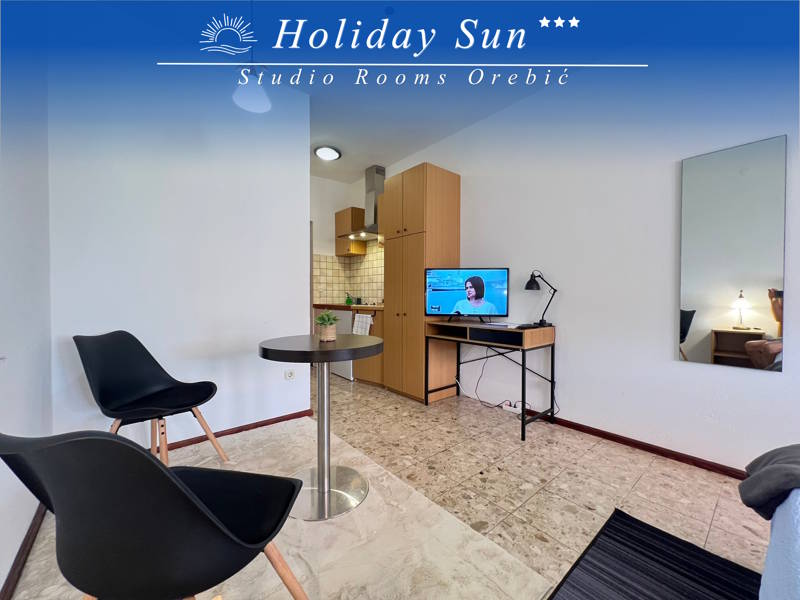
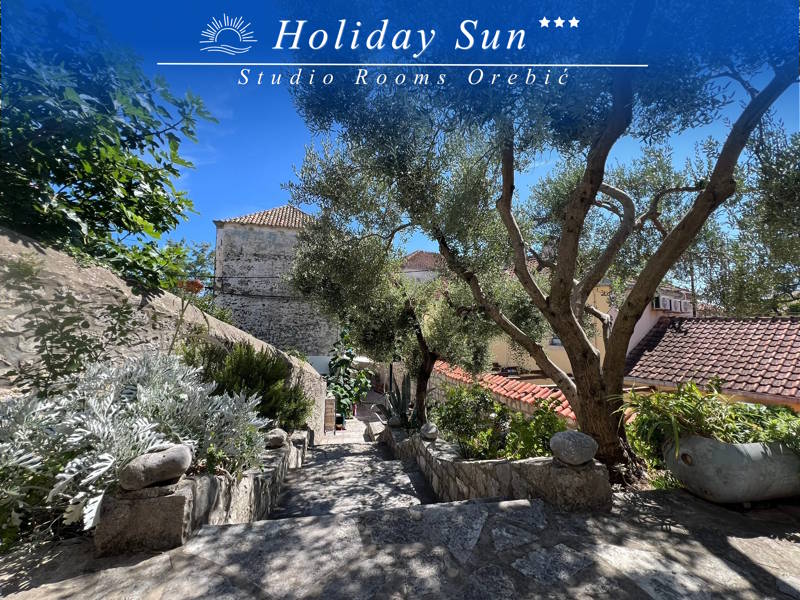
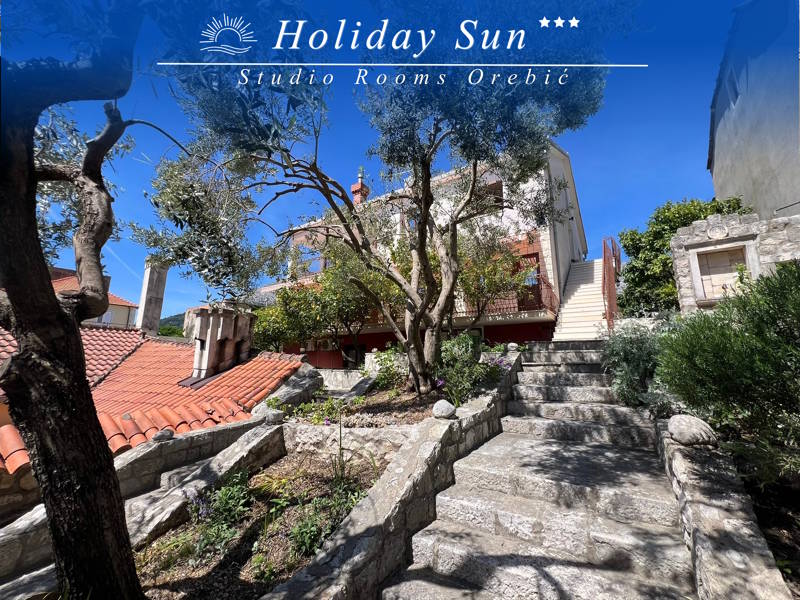
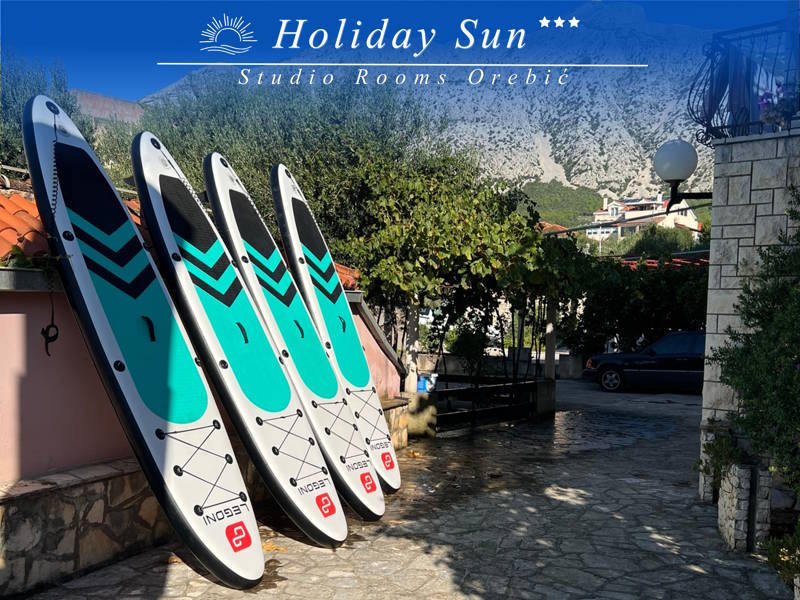
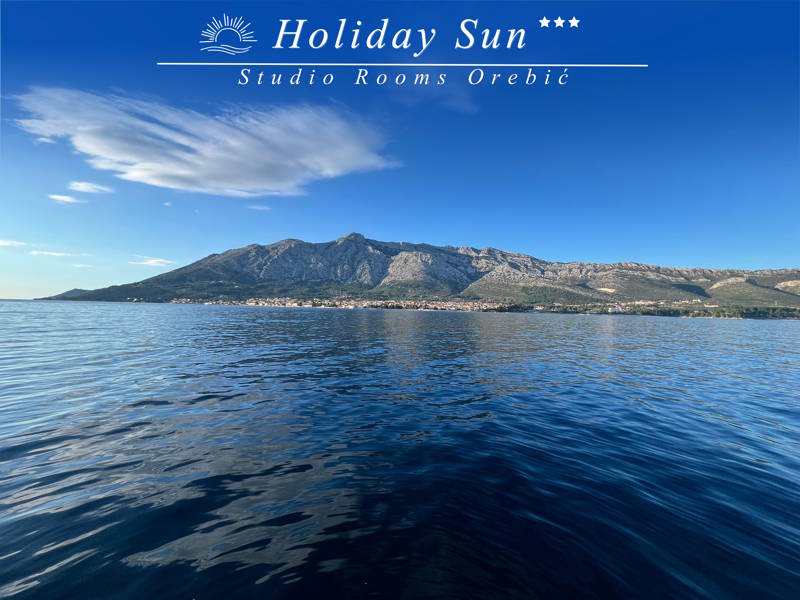
Ready to experience the charm of Orebić and the Pelješac Peninsula? Whether you are looking to spend your days relaxing just 50m from the beach, exploring hidden islands with our complimentary kayaks and SUP boards, or simply enjoying a glass of local wine in our quiet Mediterranean garden—our studios are the perfect sanctuary for couples and solo travelers.
Check availability directly or explore our studio rooms and free amenities and book directly.
Looking for beachfront apartments in Orebić for couples? Our studios are the ideal choice for a perfect Mediterranean vacation.