




FAQ
Most frequent questions and answers
No, walking through Korčula Old Town is free.
Visitors can freely explore the narrow streets, squares, waterfront promenades and many historic exterior landmarks.
However, certain attractions, including museums, exhibitions, the cathedral tower and historical collections, may charge individual admission fees.
This makes Korčula an excellent destination even for travellers who prefer exploring independently without booking an organised tour.
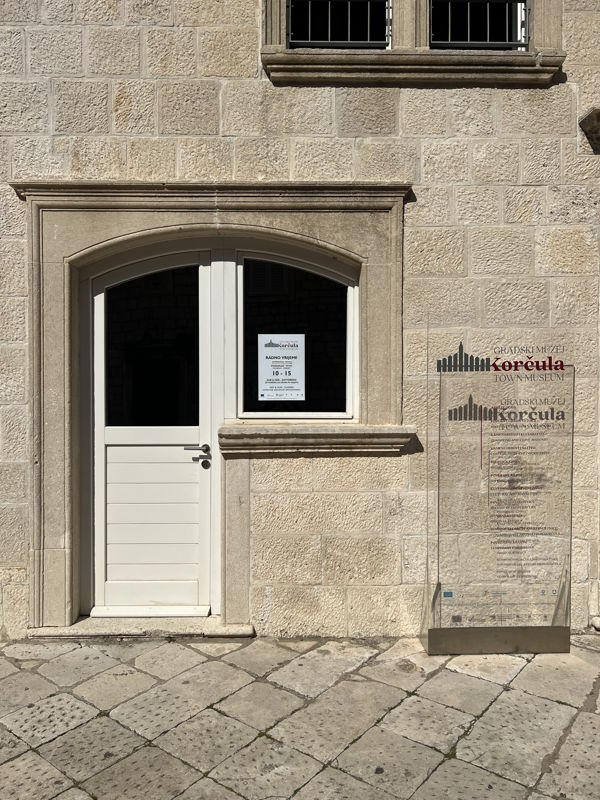
Answer: Key highlights include St. Mark’s Cathedral (showcasing stunning Gothic-Renaissance stonework by local master builders), the Veliki Revelin (Great Revelin) tower entrance, the Korčula Town Museum located in the historic Ismaeli Palace, and various medieval defensive walls and bastions offering panoramic Adriatic views.
The highlights include:
- St. Mark’s Cathedral
- Marco Polo House and Museum
- Korčula Town Museum
- Revelin Tower
- Zakerjan Tower
- Historic town walls
- Bishop’s Treasury
- Main square (Trg Svetog Marka)
- Medieval palaces and stone alleys
These attractions showcase centuries of history, culture, and architecture.
Answer: Because the historic peninsula is relatively compact (roughly a few hundred meters long), you can walk across it in just a few minutes. A single day is enough to see the major monuments and museums, though spending 2 to 4 nights allows a relaxed pace to enjoy local wine bars, nearby swimming spots, and day trips to neighboring islets like Badija.
The best months are:
- May-June: Pleasant weather and fewer crowds.
- September-October: Warm sea temperatures, relaxed atmosphere, and excellent wine tourism.
- July-August: Lively festivals, Moreška performances, and vibrant nightlife, but also the busiest period.
Many visitors find September to be the ideal balance between weather, culture, and crowd levels.